Before you begin
A table for board games isn't essential to enjoy a game. For many years we've played on dining room tables, kitchen tables, or practically any other flat surface, and for many players a regular table is still more than enough.
So, when does it start to make sense to buy a gaming table?
The answer doesn't depend solely on how much you play. It also depends on the type of games you enjoy, the space you need, and, above all, whether your hobby requires you to constantly set up and pack up games, projects, or materials.
There are certain situations where a gaming table ceases to be merely a convenience and begins to solve a real problem. If you recognize yourself in any of the following cases, a table specifically designed with two distinct playing surfaces would likely make a lot of sense for you.
1. You play Eurogames and other board games with a lot of setup.
Not all board games require a large surface. A game of cards or any simple game can be played on practically any table.
The situation changes when you start playing games with a large-scale setup.
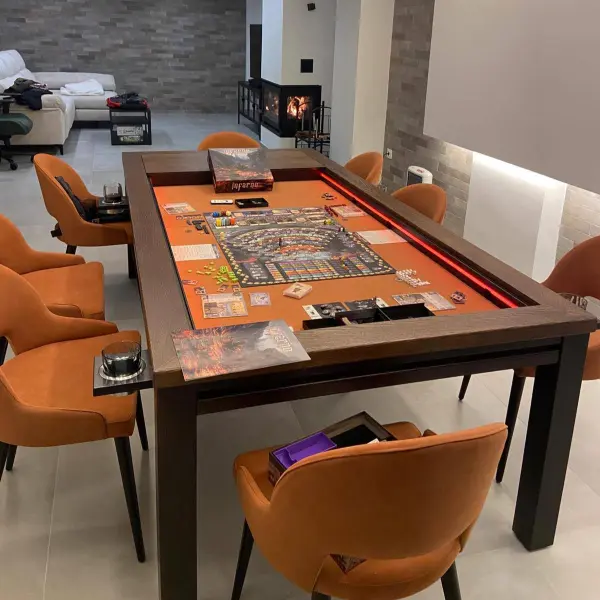
In many modern Eurogames, simply placing a game board in the center of the table isn't enough. Each player may need their own board, cards, resources, tokens, and various other elements around their playing area. In addition, there's the market, component reserves, and all the common elements that must remain accessible throughout the game.


Games like Ark Nova, Terraforming Mars, Scythe, or many of the more complex modern titles can occupy a considerable area when fully unfolded.
And there's another important detail: the space required can't always be calculated solely by looking at the board's dimensions. Players need room to organize their components, consult their cards, and carry out their actions without constantly encroaching on other players' areas.
A sufficiently large table can solve part of the problem, but there is an important difference between having more space and having a space designed for playing.
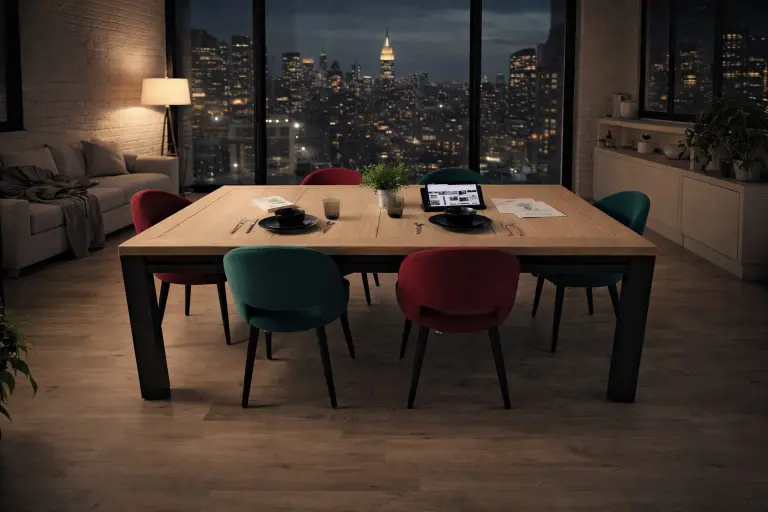
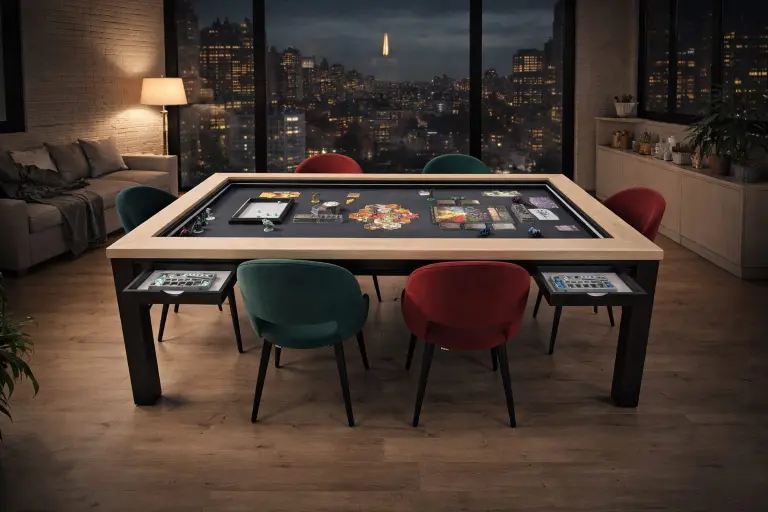
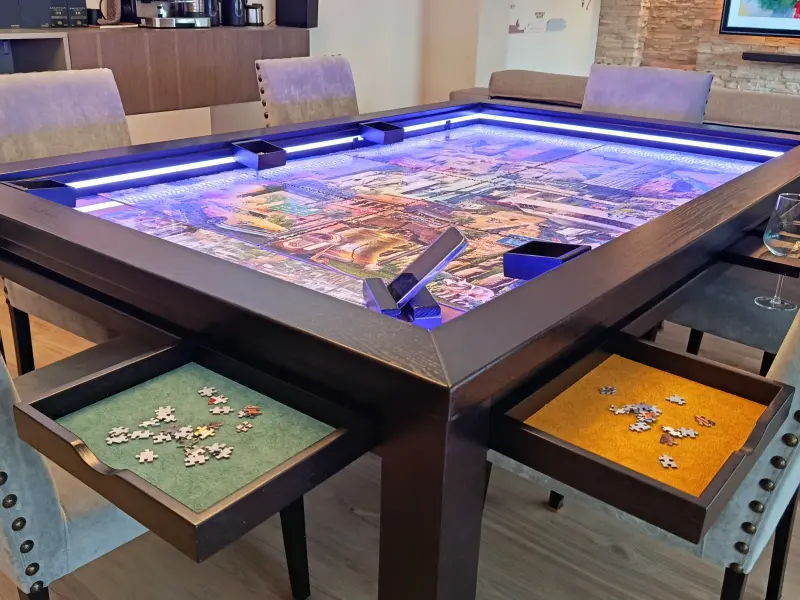
A gaming table provides a dedicated area for playing games, while the top surface can still be used for other purposes. This is especially practical when the table is also part of the dining area and everyday life in the home.
Therefore, if you usually play games with a lot of setup, a gaming table can offer much more than just a few extra centimeters of surface area: it can make the game more comfortable and organized.
2. You play campaign games and you don't want to dismantle the setup.
This is probably one of the cases where a gaming table can make a big difference.
There are games whose experience doesn't end in an afternoon. Campaigns can last for weeks or even months, and each session picks up exactly where the previous one left off.
The problem arises when it's time to clean up.
A campaign can have dozens or hundreds of components on the table: cards, tokens, miniatures, boards, scenarios and different elements that are part of the current state of the game.
Taking everything apart after each session means having to store the components, clear the table, and rebuild the scene when it's time to play again.
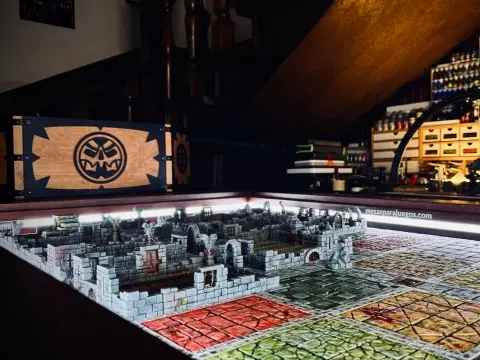
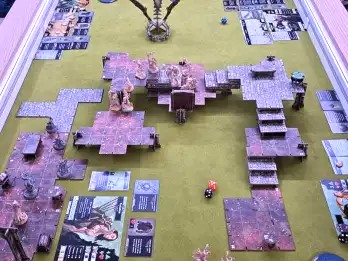
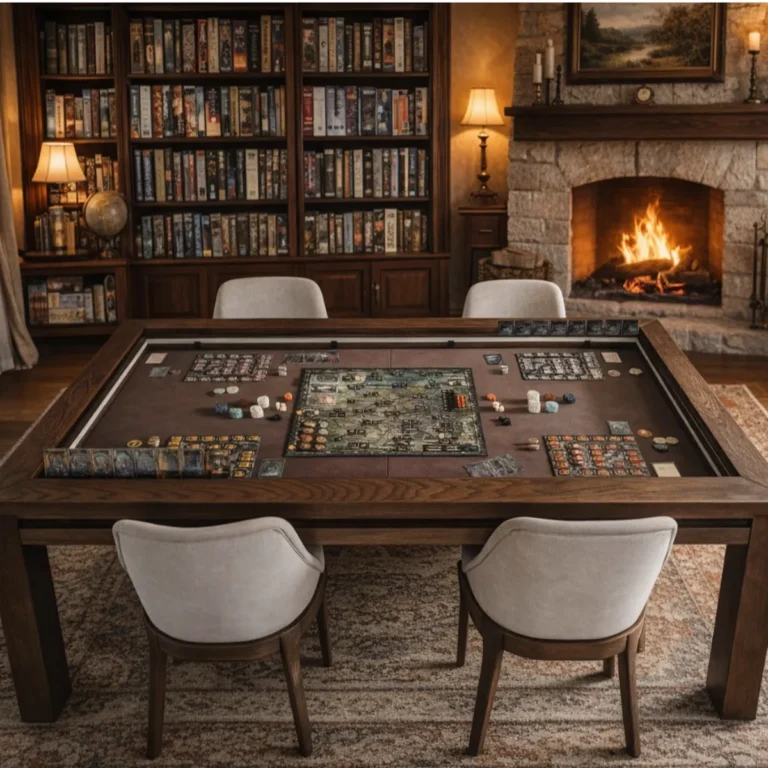
This is where one of the most interesting features of a gaming table makes special sense: being able to keep the game setup ready between sessions and protect it when you're not playing.
You can finish a session, cover the playing area, and continue another day without having to rebuild the entire stage.
This is especially interesting in large-scale campaign games like Gloomhaven, Frosthaven, Kingdom Death: Monster, or other adventure and exploration games.
The advantage isn't just saving time. It also allows you to run campaigns that might have previously seemed impractical because there wasn't a suitable place to store them.
If you've ever thought, "I'd love to play this game, but I don't want half the house occupied for weeks," you probably understand the problem perfectly.
A gaming table doesn't make a campaign shorter, but it can make it much easier to maintain and enjoy session after session.
3. You play role-playing games and need space for the game master
A role-playing game may seem, at first glance, less demanding in terms of space than a board game with a huge board.
In practice, many items can end up accumulating around the table.
The game master may need books, maps, a screen, dice, miniatures, tokens, cards, and various other game aids. The players have their character sheets, dice, pencils, books, and other materials.
And there is also an important difference compared to many board games: the game master needs their own work area.
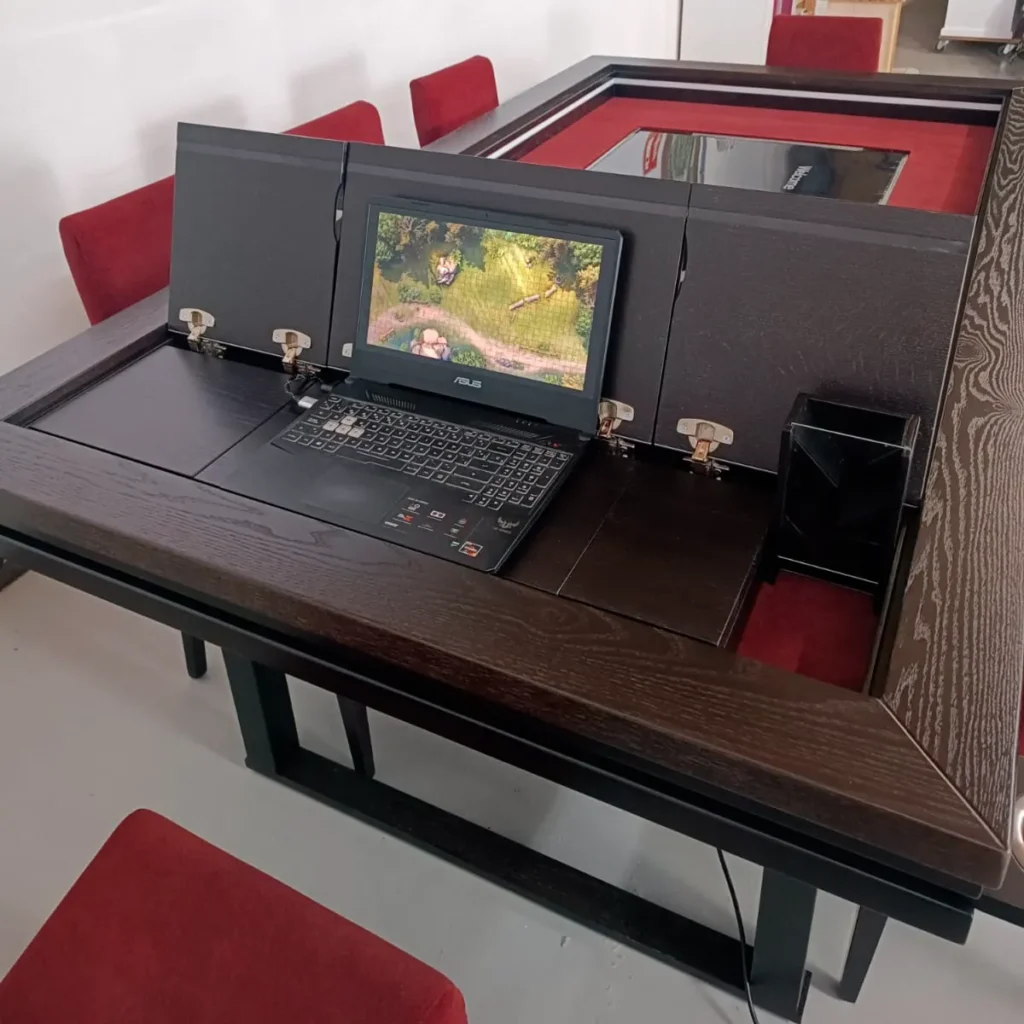
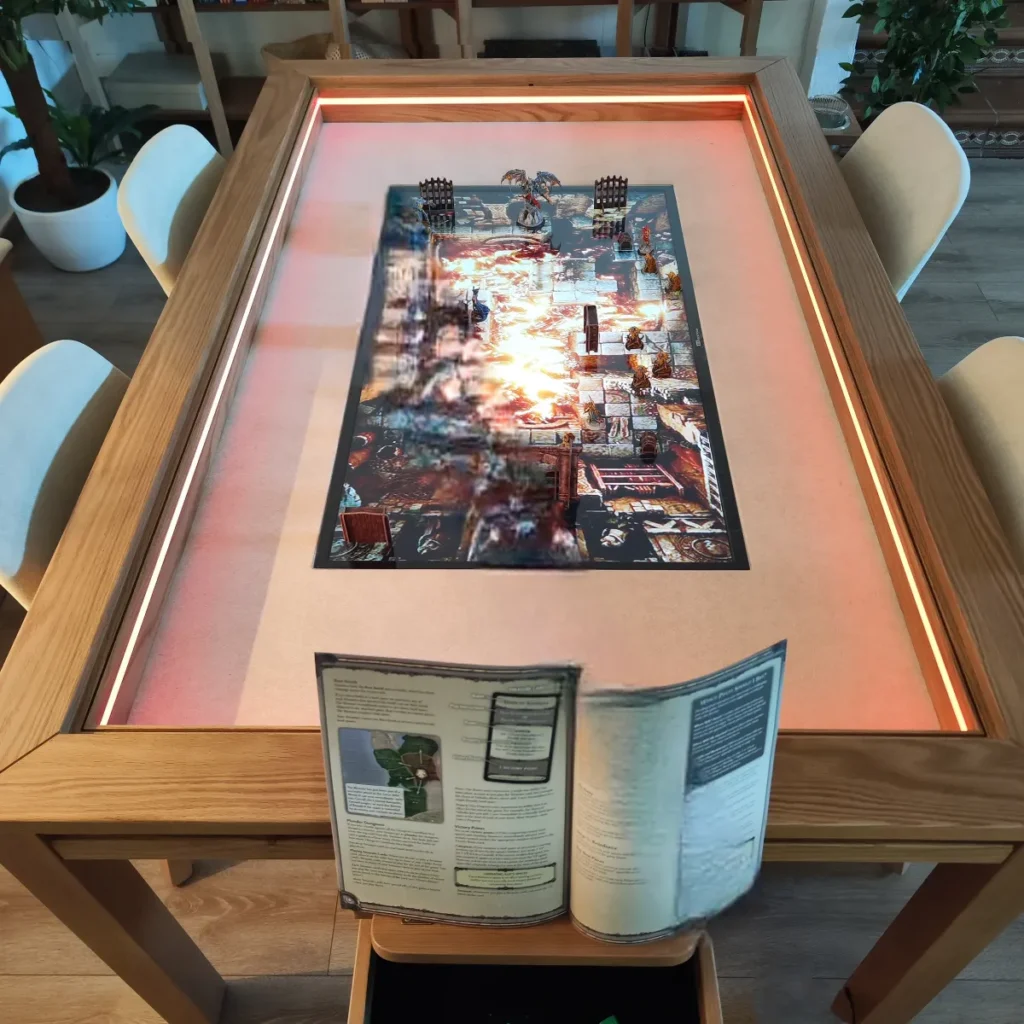
A lectern for the game master can facilitate the consultation of books and documents during the game, while a screen allows notes and information that should not be seen by the players to be kept hidden.
Maps and miniatures also need space, especially when the adventure includes combat or highly detailed scenarios.
A table designed for games allows for a better distribution of all these elements and keeps them accessible without each player having to invade the space of the others.
And again, if the campaign continues over several sessions, being able to retain some of the game's organization can save a lot of time.
For a group that regularly plays role-playing games, a game table can become much more than just a surface to place a game board on. It can be the space around which the entire game is organized.
4. Do you do puzzles, build LEGO, GraviTrax, or have other hobbies?
A gaming table doesn't necessarily have to be used exclusively for playing board games.
There is another profile for which it can make a lot of sense: people who have projects or hobbies that need a large surface and that are developed over several sessions.
A puzzle is a very simple example.
A large jigsaw puzzle can require a considerable surface area and take several days or even weeks to complete. The problem arises when that surface is the table you usually use for eating or other activities: while the puzzle is in progress, the table is practically unusable.
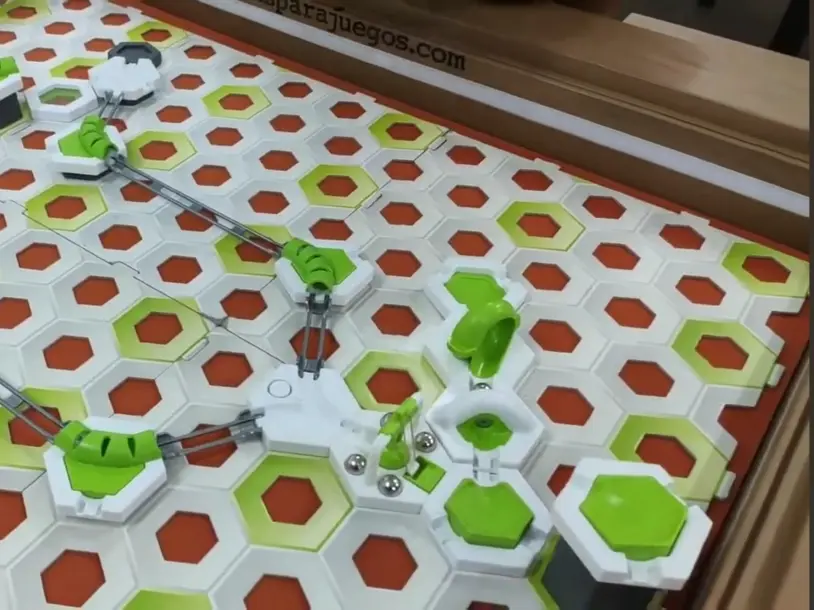
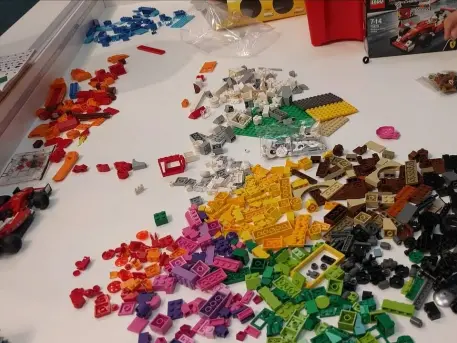
The same applies to LEGO or GraviTrax constructions. A construction can take up a lot of space and require several sessions to complete.
We can also think about models, dioramas, miniature painting, crafts, or any other hobby that involves many small pieces and a project that develops gradually.
In all these cases there is a common problem: you need space, but you don't necessarily want to use the dining room table permanently.
A gaming table can offer an independent work surface and, depending on its design, allow you to protect your project when you're not working on it.
Furthermore, having a dedicated space makes it much easier to get back into a hobby. If each session begins with clearing the table, taking out all the materials, and preparing the workspace again, any project requires extra effort even before it starts.
With a dedicated surface, the project can be kept ready and you can continue when you have time.
And this is precisely one of the reasons why a gaming table can be interesting even for people who don't usually play board games.
So, do you really need a gaming table?
The short answer is: not everyone needs a gaming table.
If you occasionally play simple games and usually have enough space on your regular table, you probably don't need a specialized table.
But the situation changes when your hobby starts to demand more space, more organization, or more preparation time.
You probably don't need it if:
– you play occasionally;
– you mainly play simple games;
– you have enough space on your usual table;
– you usually finish and put away each game in a single session.
It's probably worth it if:
– you usually play games with a lot of setup;
– you enjoy campaign games that need to stay prepared;
– you play role-playing games and need space for books, maps, miniatures and game master material;
– you do puzzles, LEGO, GraviTrax, model making, or any other activity that requires a large surface;
– you have projects that you develop over several days and you want to keep them set up between sessions.
Ultimately, a gaming table isn't an essential purchase for playing board games. It's a solution for those who have reached the point where a conventional table starts to limit their hobby.
If you find yourself in any of these cases, the next step is to know what characteristics a table should have to truly adapt to your playing style, the available space, and your needs.
In our guide on How to choose a table for board games We explain the main aspects to consider before buying, from dimensions and materials to the playing surface, mat and accessories.
And if you also want your gaming table to double as a dining table for everyday use, you can also check out our guide on How to integrate a gaming table into the dining room.